
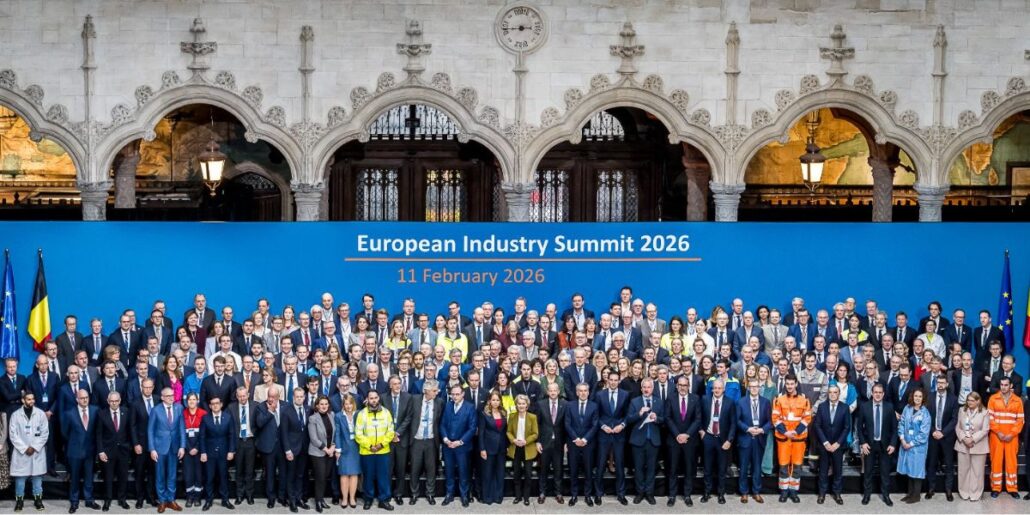
ESTC participated the high‑level Antwerp meeting on 11 February 2026, marking another milestone in the rapid expansion and influence of the Antwerp Declaration for a European Industrial Deal. What began in early 2024 with 73 original signatories has evolved into a powerful alliance of more than 1,300 organisations across 25 sectors, united around the urgent need for a stronger, more competitive European industrial foundation.
This unprecedented growth reflects a broad consensus across industries including sports surfaces, construction materials, and circular‑economy innovators that Europe must build a resilient, future‑ready industrial ecosystem to remain globally competitive and sustainable
Clear Momentum Confirmed in the 2026 Monitoring Report
The newly released Antwerp Declaration Monitoring Report (February 2026) confirms both the urgency and the momentum behind this call for action. According to the report, 83% of EU competitiveness KPIs show stagnation or decline, while European industrial users continue to face some of the world’s highest energy prices, gas prices remain 4.6 times higher than in the US, and electricity prices significantly exceed those in China, the US, and India.
The report also highlights critical gaps in clean‑energy deployment. Although Europe is expanding renewable capacity, China now has 2.4 times the EU’s clean‑energy capacity and is deploying new capacity five times faster. Grid bottlenecks and lengthy connection queues continue to hold back progress.
This evidence reinforces the Antwerp Declaration’s core message: Europe needs a coherent Industrial Deal to unlock competitiveness, accelerate decarbonisation, and secure long‑term industrial resilience.
Alignment with the Clean Industrial Deal
The European Commission’s Clean Industrial Deal has already integrated many of the Antwerp Declaration’s priorities: competitiveness, decarbonisation, infrastructure acceleration, and long‑term resilience, reflecting the growing influence of this industry‑driven movement.
For the synthetic turf sector, these priorities are essential. A strong Industrial Deal supports:
- Development of low‑carbon and circular materials
- Stable, predictable, and technology‑neutral regulation that fosters innovation
- Strengthened European production capacity and supply security
- Improved recycling infrastructure and circular‑economy performance
- Continuous R&D in sports and landscaping applications
These areas closely mirror the Declaration’s emphasis on affordable low‑carbon energy, streamlined legislation, raw‑material security, and a smarter innovation framework.
Industry Voices Call for Technology Neutrality and Investment Confidence
During the Antwerp 2.0 discussions, industry leaders highlighted the necessity of technology‑neutral regulation and a supportive investment climate, both essential conditions for Europe to remain at the forefront of sustainable industrial solutions. These messages align fully with the findings of the 2026 Monitoring Report, which stresses the structural reforms needed to maintain Europe’s global competitiveness.
ESTC’s Continued Commitment
ESTC was proud to contribute to these important discussions. As reaffirmed throughout the Antwerp Declaration movement, the synthetic turf industry stands ready to support a European Industrial Deal that brings together innovation, sustainability, and competitiveness – a foundation necessary not only for the sports and landscaping sectors, but for Europe’s industrial future as a whole.
As the Declaration surpasses its early milestones and evolves through structured monitoring and policy alignment, ESTC remains committed to engaging with policymakers, industry partners, and innovators to help build a greener, stronger, and future‑ready European industrial ecosystem.
