
How the Right Footwear Shapes Performance – From Turf to R&D Labs
Whether an athlete is competing on natural turf or a modern synthetic turfs surface, one truth remains constant: the choice of footwear matters. The right shoe can improve traction, enhance comfort, reduce injury risk, and even help maintain the long‑term condition of the playing surface. Behind every high‑performance shoe lies a deeper story – one built on research, biomechanics, material science, and countless hours of testing.
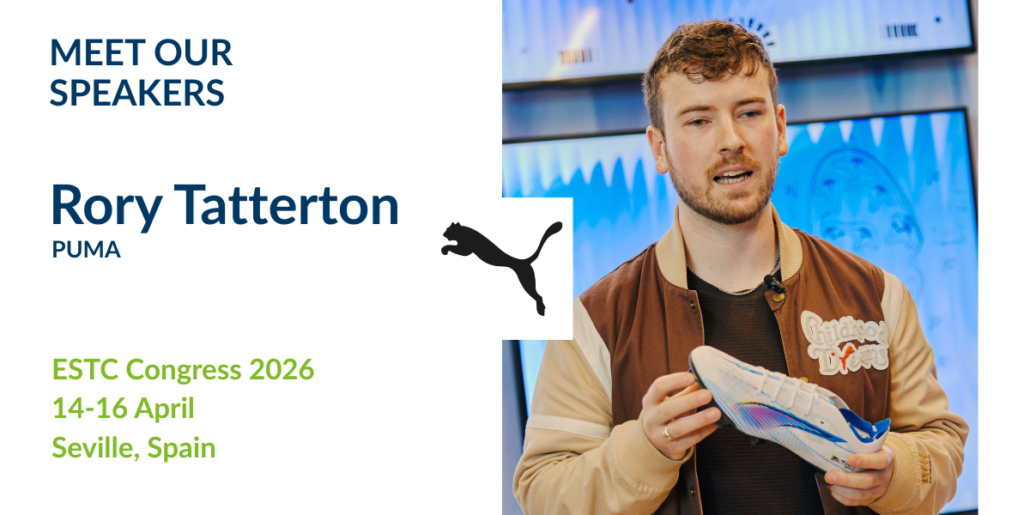
This year at the ESTC Congress in Seville, attendees will have the opportunity to hear directly from PUMA, bringing their perspective on footwear research and design. As a company deeply involved in performance‑oriented footwear development, PUMA approaches football boot design with a focus on understanding how athletes interact with synthetic turf surfaces in real‑world play.
From the Lab to the Pitch
In his session, Rory Tatterton from PUMA will take participants behind the scenes of athletic footwear development with his presentation:
Shoes on the Surface: R&D Insights from Footwear Innovation
His presentation will explore PUMA’s approach to research and development focusing on the work that happens long before a sketch becomes a prototype. Designing an effective football boot begins not with aesthetics, but with science: biomechanics, traction mechanics, material behaviour, and surface‑specific performance characteristics.
Key Themes Rory Will Unpack
- Footwear R&D: Focus Areas for Achieving Impact
Where do researchers invest their time across sports and surfaces? Rory will provide insight into the investment areas targeted by a sports footwear company like PUMA to ensure research is as impactful as possible. - Footwear Product Offering: Design Intention vs. Real‑World Use
A boot may be engineered for speed or agility, but how does it behave under a striker’s foot on natural grass? How does performance change on third‑generation artificial turf? This section examines the difference between laboratory intention and real‑world behaviour. - Shoe–Surface Interactions: Performance from a Footwear Perspective
Different surfaces interact differently with certain stud parameters.Understanding these interactions is critical for both performance and player safety. Rory will discuss how R&D teams evaluate these variables to design footwear that supports, rather than conflicts, the playing surface and athlete movements.
A Story of Collaboration Between Surfaces and Shoes
Sport performance is never shaped by footwear alone. The field and the shoe form a single system, influencing acceleration, turning ability, stability, and injury risk. As synthetic turf technologies evolve – changing fibre structures, infill compositions, and shock‑pad behaviour footwear must evolve with them.
At this year’s ESTC Congress, Rory Tatterton will connect these two worlds: surface science and footwear innovation. His session illustrates how research‑driven design can reshape the way athletes move, feel, and perform ensuring that shoes and synthetic turf surfaces are developed not in isolation, but in synergy.
ESTC Congress 2026 – latest programme & registration: https://estc.idloom.events/estc-congress-2026